
The Story
Why does Nevill Hall have a hospital and a garden ?
Nevill Hall Hospital and Gardens are a special place !
Full of memories for many people, in many ways, with the “Spaces” changing through time.
The hospital began in its major form as one of the many District General Hospitals (DGH) constructed from the 1962 Hospital Plan for England and Wales in the grounds of Nevill Hall, Abergavenny. The original buildings, in two phases, were completed in 1974.
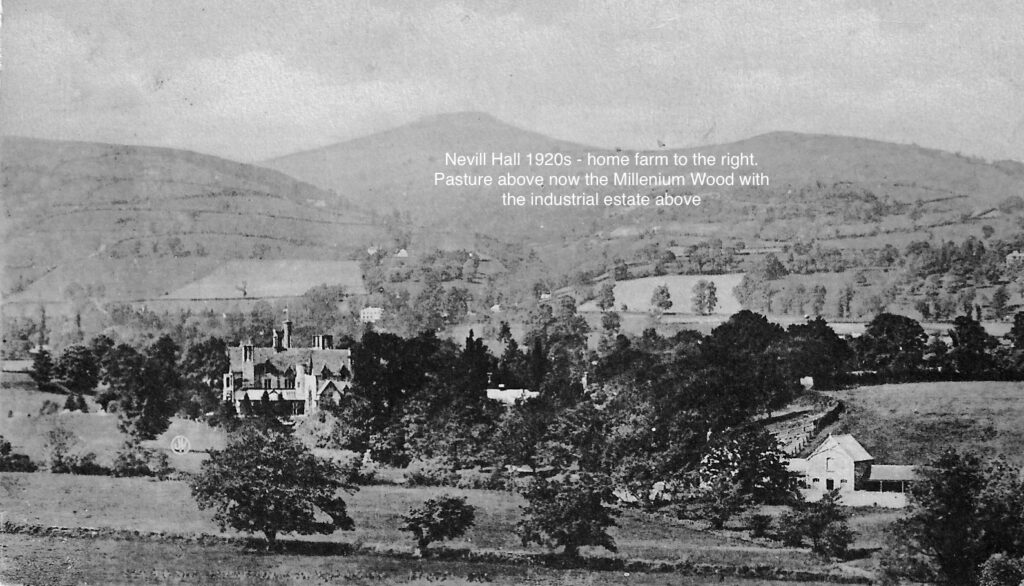
The site was chosen because of its prime location, and availability, already existing as part of the cottage hospital network.
The beginning
The mansion itself originated as a stately residence. Built in 1869 as “The Brooks” by James Hill, it was then bought by the Nevill Family to be renamed Nevill Hall. It was sold on again in 1920 to the Blaina and District Hospital to become a convalescent home but only remained it that role for less than a year. However, the property remained in their ownership with the buildings rented out for various purposes. The gardens and Home farm continued to serve as a place of produce for that hospital and recreation.
Continuing care was given lead by a resident head gardener living in the still standing lodge This lapsed somewhat in war years, but recalled by the daughter of the Ellis family who were the last farmers of Home Farm 1936-1952 as “ being beautifully manicured and as a child it was wonderful playground …….”
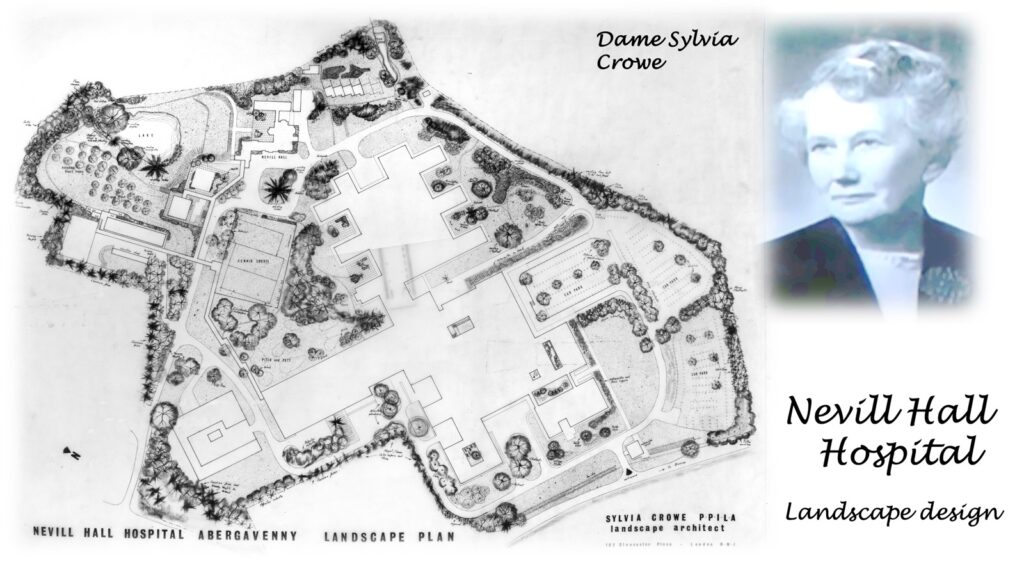
With the building of the DGH respect for the gardens was shown by the employment of Dame Sylvia Crowe, president of the Landscape Gardeners association, to oversee landscape development, and a team of gardeners employed.
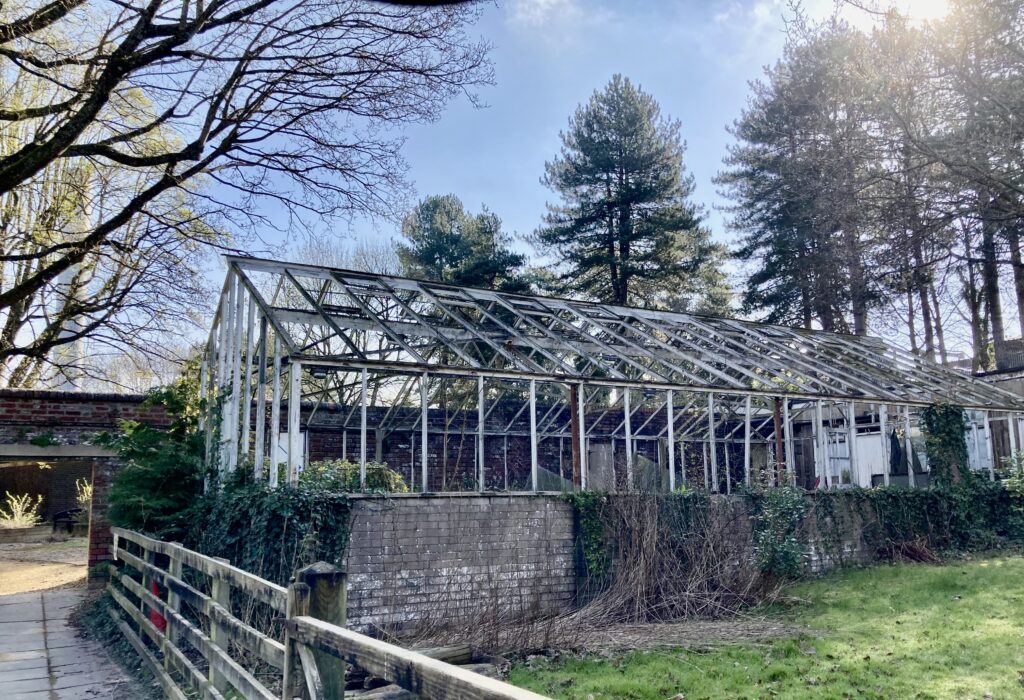
At that time a cedar frame “Pratten” greenhouse was then built for the hospital gardens connected into the hospital heating system.
In 1992 at the Ebbw Vale Garden festival the hospital’s staff, notably the gardeners, helped by the landscape architects designing the festival created a garden display called “Nevill Hall Garden of Health” to highlight the benefits of nature and gardening for health and well-being.
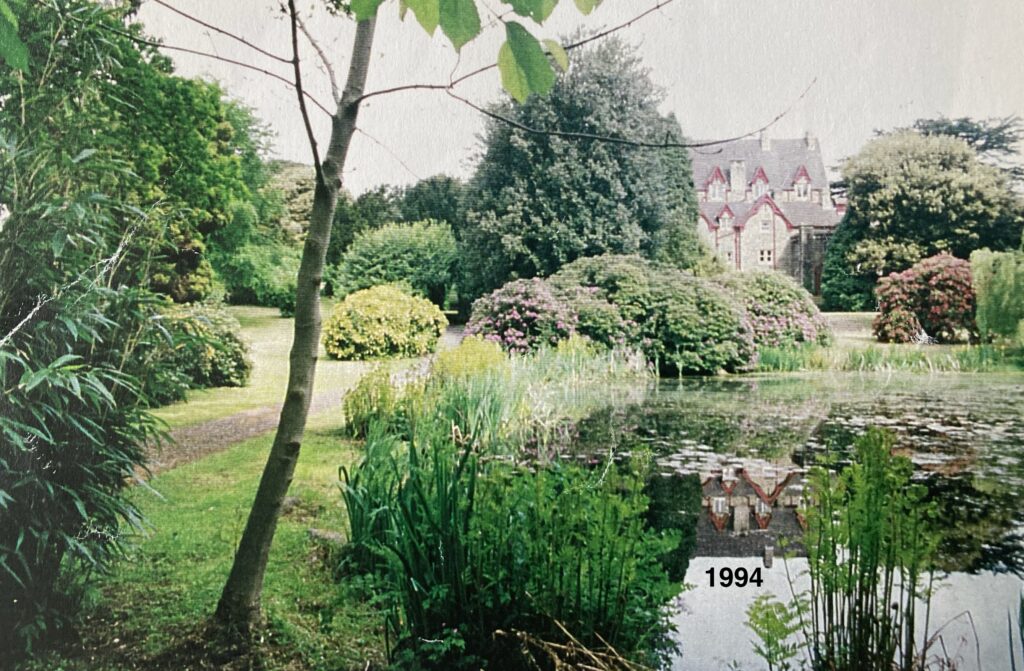
It featured views of the hospital gardens, and included plants known for their medicinal properties, as well as sensory elements to encourage rest and relaxation.
,
The gardens thrived providing relaxation and recreation for the staff, patients and visitors.
In the early years of the hospital many staff, doctors and nurses were resident for whom the gardens were a wonderful, and necessary respite.
.
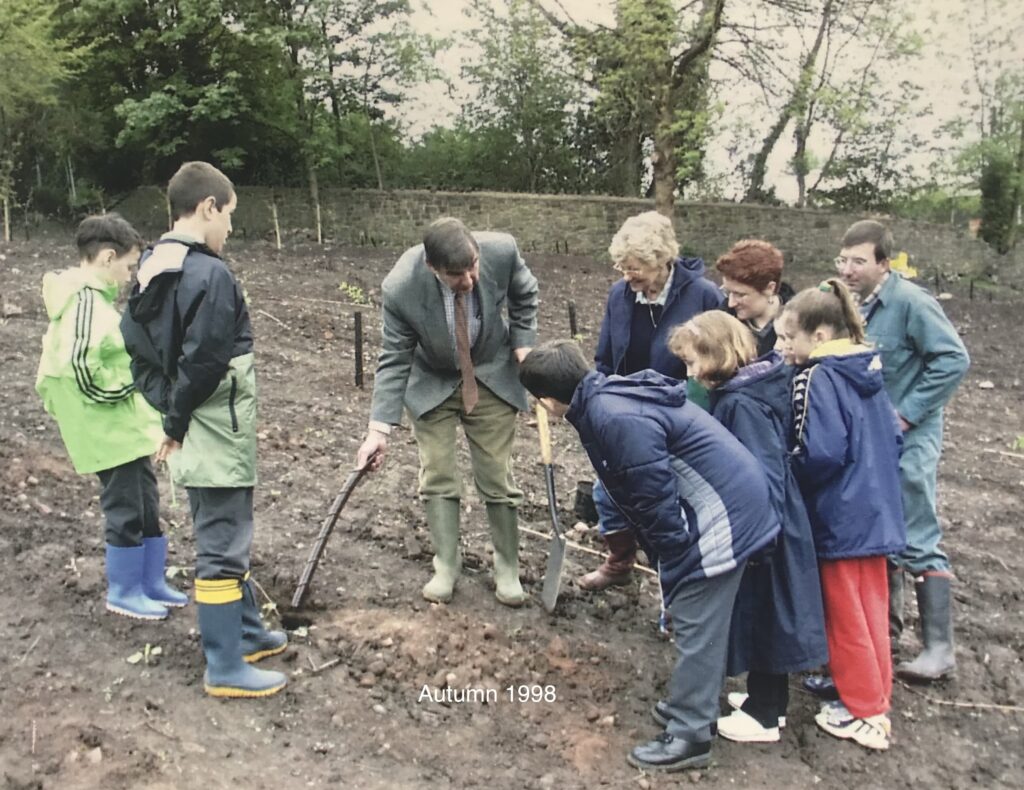
The next major enhancement came with the Millennium Garden Project (1998–2001), initiated by then chairman of Nevill Hall and District Trust, Gareth Jones.
This included the creation of a sensory garden, improving the orchard, and a new woodland planted with 600 trees involving local schoolchildren.
That project was community-driven and supported by a dedicated charity (the Branching Out Appeal: 10508657 ) and volunteers including Rotary, Young Farmers, and hospital staff.
The Millennium Garden Project significantly improved the gardens to provide therapeutic respite for staff, patients and visitors, but sadly that quality is now failing ……. but certainly not beyond hope!
...... and what of Nature ?
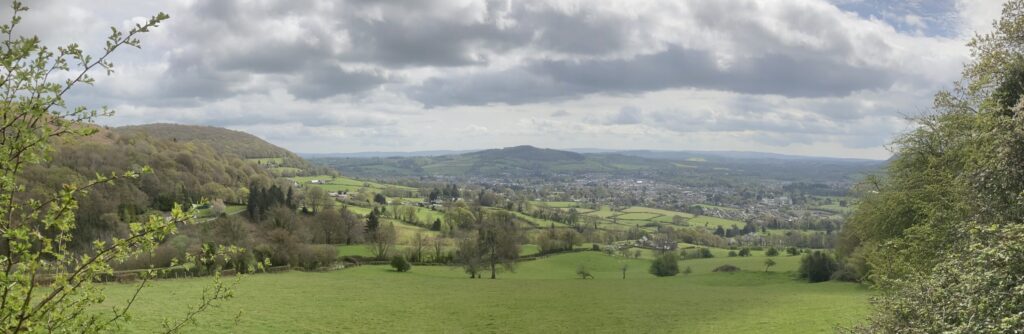
Nevill Hall Hospital’s gardens feature diverse natural habitats in a scenic setting. In 2023, ABUHB asked Mott McDonald to assess biodiversity across roughly 14 hectares designated as a Site of Importance for Nature Conservation (SINC).
The area includes woodland, shrubs, sheep fields, ponds, scattered trees, grassland, and developed hospital zones. The site sits on Abergavenny’s edge, near housing estates and farmland, with livestock fields separating it from the protected River Usk.
The report outlines environmental and social benefits like carbon sequestration, climate resilience, wellbeing, and heritage protection, supporting Welsh policies such as the Wellbeing of Future Generations Act (2015).
Key recommendations include further surveys and ongoing habitat monitoring to address any issues. Monitoring species is optional but encouraged if possible, ideally involving local volunteers.
So for the Future ?
The gardens have declined mainly due to reduced health service resources, resulting in no employed gardeners and minimal contractor maintenance. Limited public interest, poor access, and a lack of awareness have also hindered ongoing support.
Gardens are proven to benefit people and nature, and as part of a healthcare facility in a town with extensive garden networks, support is essential.
Nevill Hall Nature Spaces aims to provide this necessary assistance.